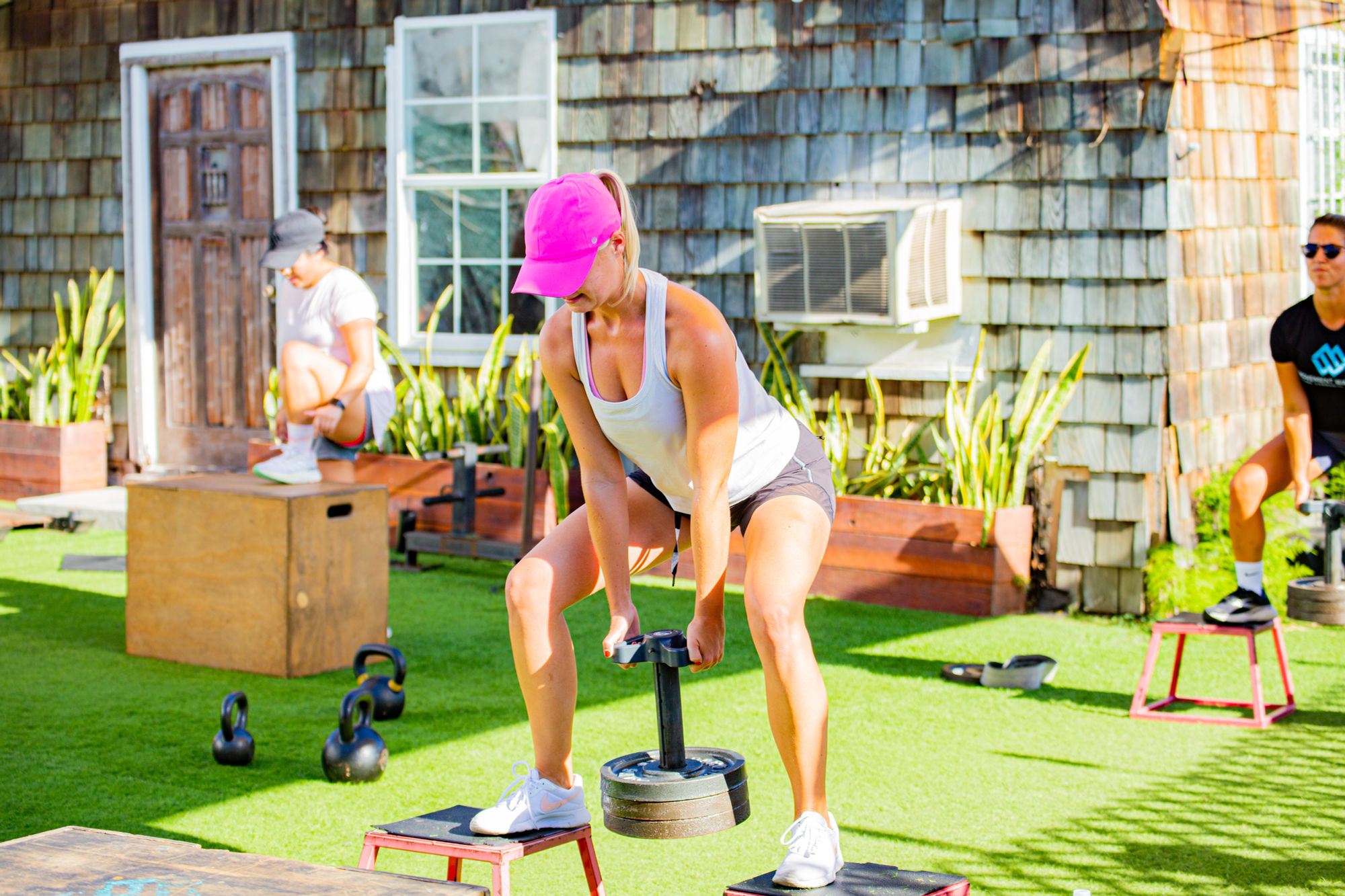
Training outdoors is not a gimmick. It changes the session: the ground is real, the air moves, the light is in your eyes, and the weather gets a vote. In Pacific Beach that usually means sun, a marine layer that burns off by mid-morning, and salt in the air. A good outdoor session plans for all of it.
The advice below is general. It is not medical advice, and it is not a substitute for listening to your own body or talking to a doctor if you train with a condition that heat affects.
Train with the weather, not against it
The best outdoor session is the one that happens at a temperature you can work in. On a clear San Diego day, the difference between 9am and 1pm can feel like two different gyms. If you have a choice, take the earlier slot or the late afternoon. If you do not have a choice, adjust the work: shorter rest is not a virtue when the body is already hot, and a conditioning block that felt fine at 68 degrees can feel reckless at 85.
Watch the surface, too. Turf gets hot enough to matter through thin shoes, and the shade moves over the course of a session. Set up your station where you will still have shade for the last set, not just the first.
Hydrate before you feel it
Thirst arrives after the deficit, not before it. Start the session with water already in you, keep a bottle within reach of the bar, and drink between sets rather than waiting for a break that may not come. If your session is long or the day is hot, an electrolyte drink is a reasonable tool; it is not a requirement for every workout.
- Bring more water than you think you need. You can always take it home.
- Drink on a schedule during long conditioning blocks, not only when you feel dry.
- Check the colour of your urine the next morning; dark is a signal to do better.
- Skip the pre-workout dehydrators. Coffee is fine; a double espresso in the sun is a choice.
The sun is a training variable
You do not need a burn to pay for a good session. UV exposure adds up even when the marine layer makes the sky look harmless, and it adds up faster on reflective turf. Sunscreen before you start, a hat for the parts of the session when you are not under the bar, and sunglasses that stay put are the basics. Reapply if you are outside for more than a couple of hours.
If you train in the middle of the day, look for shade between sets. Standing in the sun because the rack is in the sun is not toughness; it is just extra heat load that you will pay for in the last block.
Salt air and your gear
Salt air is kind to your lungs and unkind to metal. Wipe down collars, clips and any bare steel that lives outside. Keep a towel over the bar if it sits between sets. Shoes and straps dry better outside the bag than inside it, and a damp towel left in a car is its own biological experiment.
Chalk is your friend, but a little goes a long way when the air is damp. Use enough to keep the bar from sliding, not enough to leave a cloud behind you.
Recovery is part of the outdoor session
Heat adds stress, and stress adds to the training load. That is not a reason to avoid it; it is a reason to account for it. If you did a hard hot session, the next day does not need to be another hard hot session. Walk, stretch, get out of the sun, and eat something with salt in it. The adaptation happens between sessions, not during them.
The outdoors is not a background. It is part of the training load.
A short checklist
- Water bottle filled before you leave the house.
- Sunscreen on the neck, ears and hands, not just the face.
- Hat and sunglasses for the walk in and the conditioning block.
- A towel for the bar and the back of your neck.
- A realistic plan for the heat: fewer rounds, longer rest, or an earlier start.
None of this is complicated. It is just the difference between training outside as a novelty and training outside as a habit. The second one is what lasts.
Written by The Movement Warehouse, Pacific Beach.
All guides