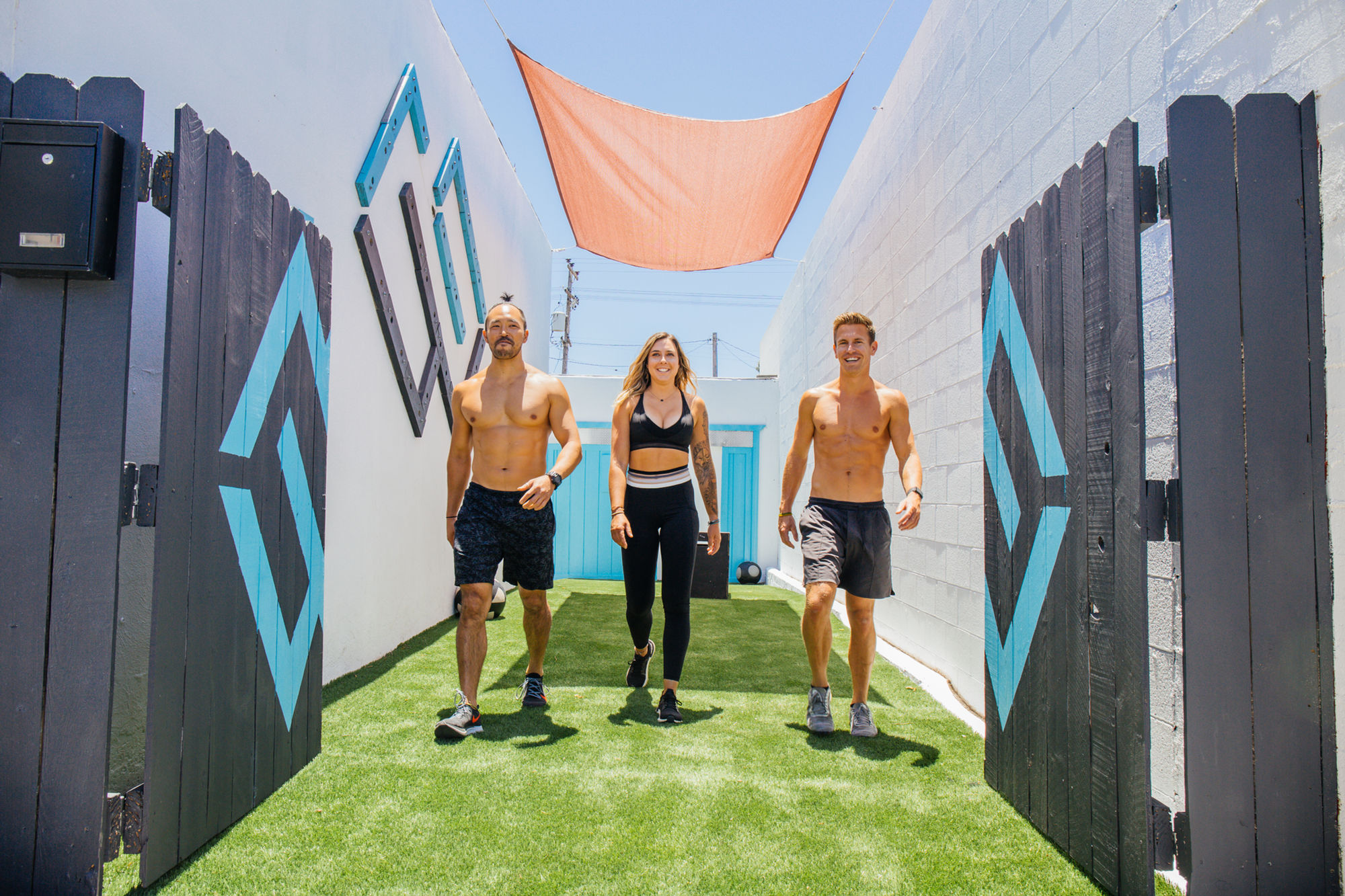
The first strength session is mostly admin: learning where things are, what the coach expects, and how a set should feel. The lifting is the easy part. Here is a walkthrough so the hour is not a surprise.
Before you arrive
Eat something normal a couple of hours before. Not a new supplement, not a fasted experiment, not a heavy meal you will regret under a bar. Bring water, a towel and shoes you can move in. If you have an injury history, a recent surgery or a condition that affects exercise, mention it before the session rather than halfway through.
At MVMT, come in 15 minutes early to your first class. Tell the coach it is your first session and what you want to get out of it. That is not a disclaimer; it is useful information.
The warm-up is not a formality
A good warm-up raises your temperature, moves the joints you are about to use and gives the coach a look at how you move before there is a load on the bar. Expect something for hips, shoulders, ankles and the mid-back. It should feel like work, not like a stretch class.
If a position feels wrong, say so. A good coach will find a version you can do well. A bad coach will tell you to push through. You are allowed to ask which one you are getting.
The main lift
Most first sessions centre on one or two big movements: a squat, a hinge, a press or a pull. The coach will start you light, watch the pattern, and add load in small steps. The first set is a rehearsal. The last set is the work.
- Ask what the target is before the set: reps, effort, or a technical cue.
- Leave two or three reps in reserve. You are learning the movement, not testing it.
- If your form changes, the set is over. That is a successful set, not a failed one.
- Write down the load and the reps. Memory is a bad logbook.
You do not need to find your one-rep max. A true max is a skill and a risk, and it is not the point of week one. A recent set of five to eight reps is enough to estimate a working max with a formula, which is why the calculator on this site asks for reps rather than a heroic single.
The accessory work
After the main lift comes the supporting work: single-leg, upper back, core, carries, arms. It is less glamorous and it is where a lot of the durability comes from. The weight should be light enough that you can feel the target muscle and heavy enough that the set is not a warm-up.
This is also where new lifters tend to add too much. Two or three good accessory movements are plenty. You can always add more next week.
The finish
A cool-down, a few breaths, and a note about how it went. The note matters more than the stretch. Write the date, the main lift, the load, the reps and one sentence about how it felt. In six weeks that note is the difference between guessing and knowing.
The first session is not a test. It is a baseline.
The day after
You will probably be sore. Soreness is not a scorecard, and it is not required for progress. Move a little, eat enough protein, sleep, and go back for the next session. If the soreness is sharp, one-sided or lasts more than a few days, get it looked at rather than training through it.
The people who get strong are not the ones who never feel sore. They are the ones who come back, keep the log, and let the coach adjust the plan. That is the whole trick.
Written by The Movement Warehouse, Pacific Beach.
All guides